
Clinic build stories
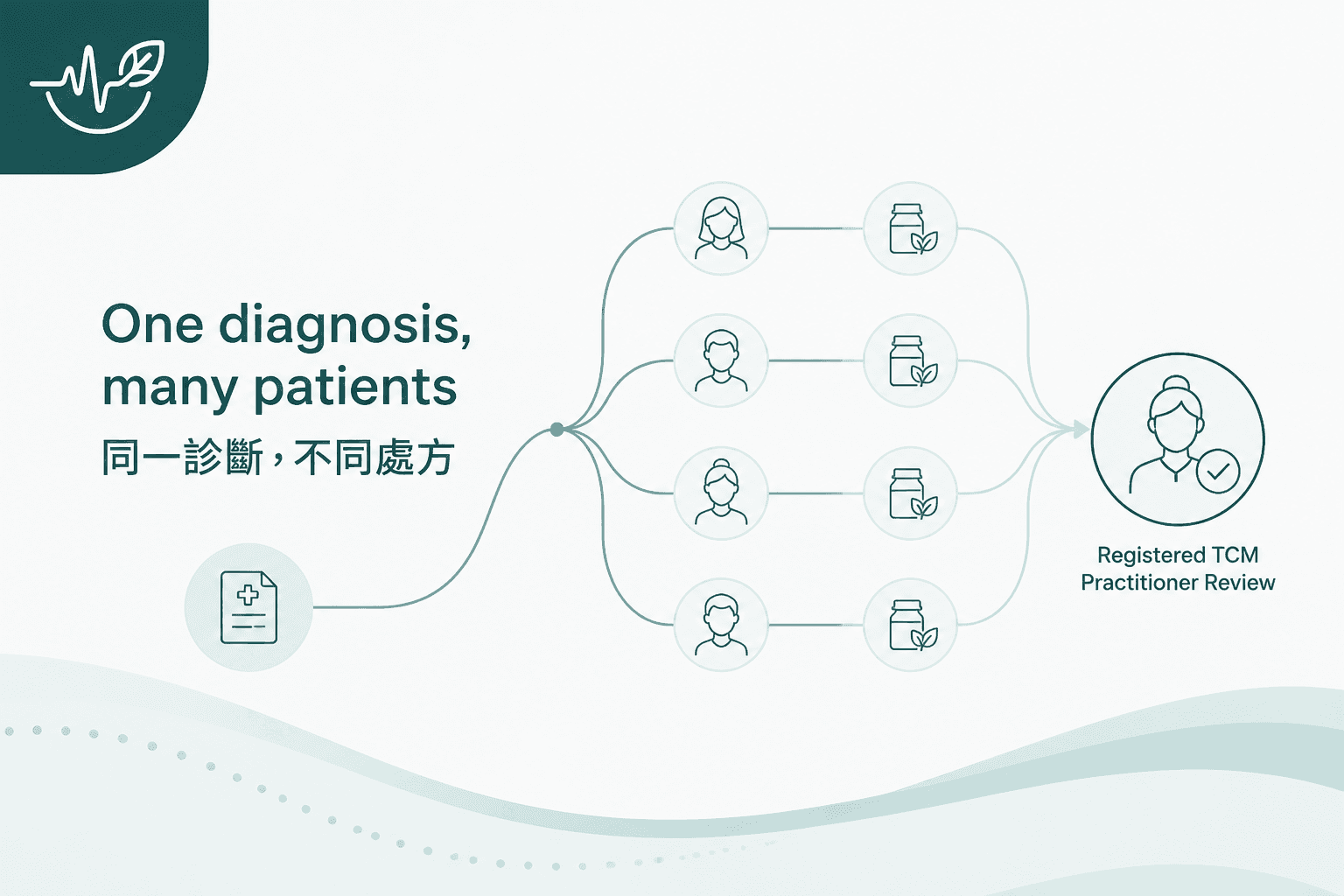
One diagnosis, many patients: RAG-powered prescription tailoring
After diagnosis, treatment paths become bounded — but Chinese medicine still requires customization. The same retrieval architecture drafts options for licensed practitioner review.
The same retrieval architecture that supports diagnosis can support treatment — but the task changes.
Once diagnosis is established, the treatment landscape becomes more tractable: trusted protocols bound the options. Yet Chinese medicine's strength was never one-size-fits-all. The plan must fit the person, not only the disease name.
Consider the same pattern name applied to different lives. Menstruation may be heavy or absent — formulas and cautions shift. Chronic stress changes how you emphasize regulation versus tonification. An elderly patient on multiple Western medications needs interaction awareness. Pediatric dosing is not adult dosing scaled down. The same diagnosis label can require different emphasis, different contraindications, different formulas.
Our method combines diagnosis, patient context, and retrieved management knowledge from trusted protocols. The system drafts patient-specific treatment options — a starting point for licensed practitioner review only.
Not autonomous prescribing. Not pharmacy fulfillment as a promise in this story. People decide.
The final article in this series explains who safeguards those decisions — and why speed without gates is not safety.